
Itching · 4 min read
Why Does Your Scalp Itch? A Care Guide for Sensitive Scalps
Around half of adults worldwide say their scalp is sensitive. The most common causes of itching and care that does not tire the scalp.
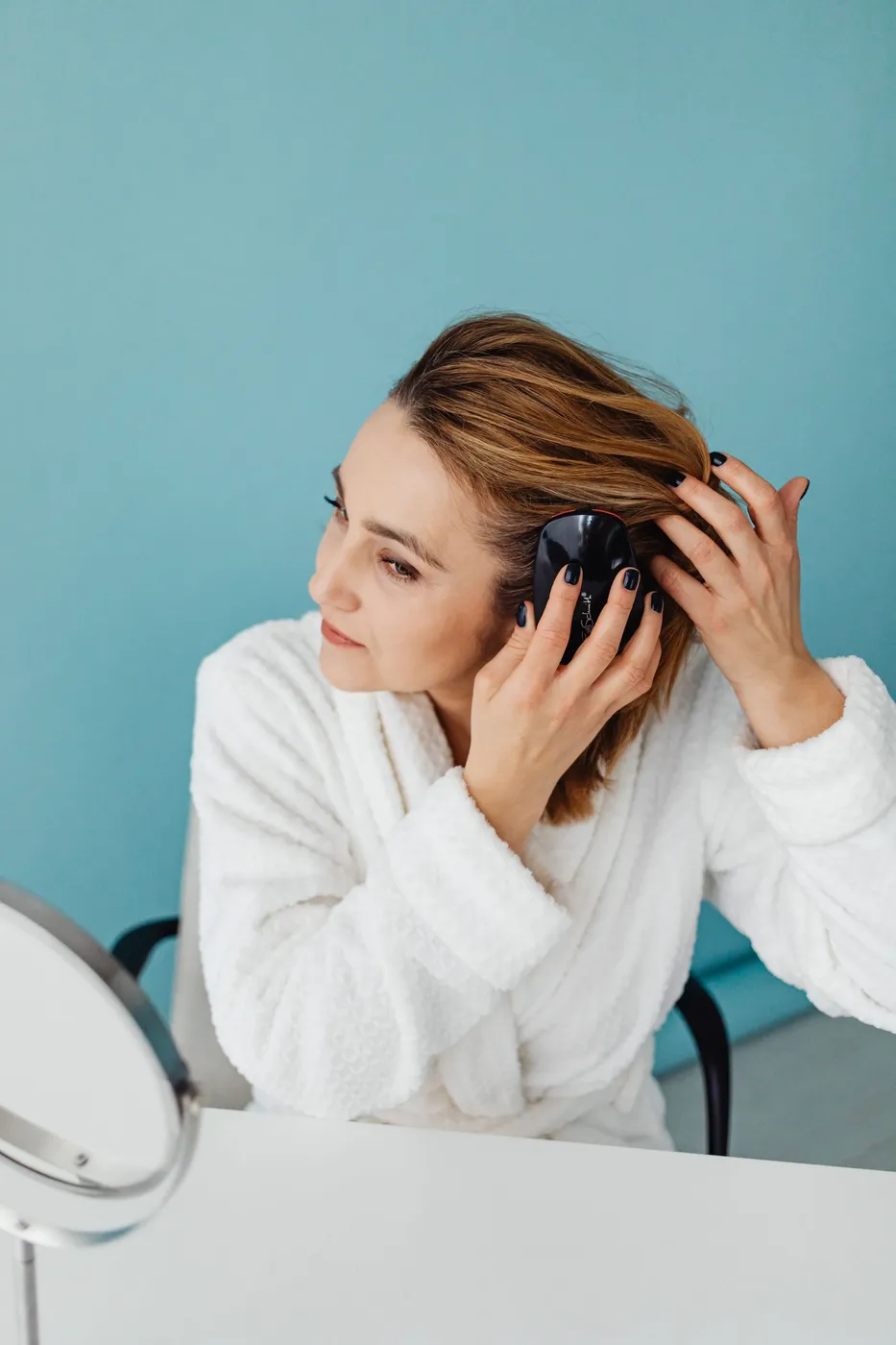
Almost one in two people
In a survey of 50,552 people in 20 countries, 47.2% of adults described their scalp as sensitive: 48.8% of women and 44.6% of men (Misery et al., 2024). Of those with a sensitive scalp, 89% report itching and 45% report tingling (Brenaut et al., 2021).
The scalp is skin too
The scalp has a barrier of its own. When this protective layer weakens, water loss increases and the scalp becomes more sensitive to external factors such as heat, pollution and chemicals. A representative study in France listed pollution, heat, emotions and shampoos among the triggers (Misery et al., 2008).
The most common causes
Harsh cleansers: the effect of SLS on the skin barrier can still be measured on day 10 (Löffler and Happle, 2003). Very hot water. Sensitivity to dyes and fragrance. Dryness. Sweating under helmets and hats. Stress.
In women, burning and itching after colouring and heat styling stand out; in men, itching after helmets, hats and frequent short haircuts.
A routine that does not tire the scalp
Choose a gentle shampoo free of alcohol, parabens and SLS/SLES. Use lukewarm water. Massage the shampoo in with your fingertips, not your nails. Apply conditioner to the ends, not the scalp; people with sensitive scalps were found to use more conditioner (Brenaut et al., 2021).
The prebiotic formula supports the scalp barrier and leaves the roots feeling fresh and comfortable. Studies with microbiome-focused ingredients found that sensitive skin became more resilient (Guéniche et al., 2010).
Frequently asked
Can switching shampoo make the scalp itch?
Switching to a shampoo with harsh cleansers can trigger itching on a sensitive scalp. A gentle formula lowers that risk.
Does hot water dry out the scalp?
Yes, very hot water strips the scalp of oil and moisture. Choose lukewarm water.
Sources
- Misery et al. (2024). Perceived prevalence of a sensitive scalp: A worldwide study. J Eur Acad Dermatol Venereol. PubMed ↗
- Brenaut et al. (2021). Sensitive Scalp: A Possible Association With the Use of Hair Conditioners. Front Med. PubMed ↗
- Misery et al. (2008). Sensitive scalp: does this condition exist? An epidemiological study. Contact Dermatitis. PubMed ↗
- Löffler & Happle (2003). Profile of irritant patch testing with detergents: sodium lauryl sulfate, sodium laureth sulfate and alkyl polyglucoside. Contact Dermatitis. PubMed ↗
- Guéniche et al. (2010). Bifidobacterium longum lysate, a new ingredient for reactive skin. Exp Dermatol. PubMed ↗