
Dandruff · 5 min read
What Causes Dandruff and How Do You Get Rid of It? The Scalp Microbiome and Dandruff
Dandruff is not just dryness; it is linked to a shift in the balance of bacteria and yeast on the scalp. The difference between dry and oily dandruff, the causes and care that supports balance.
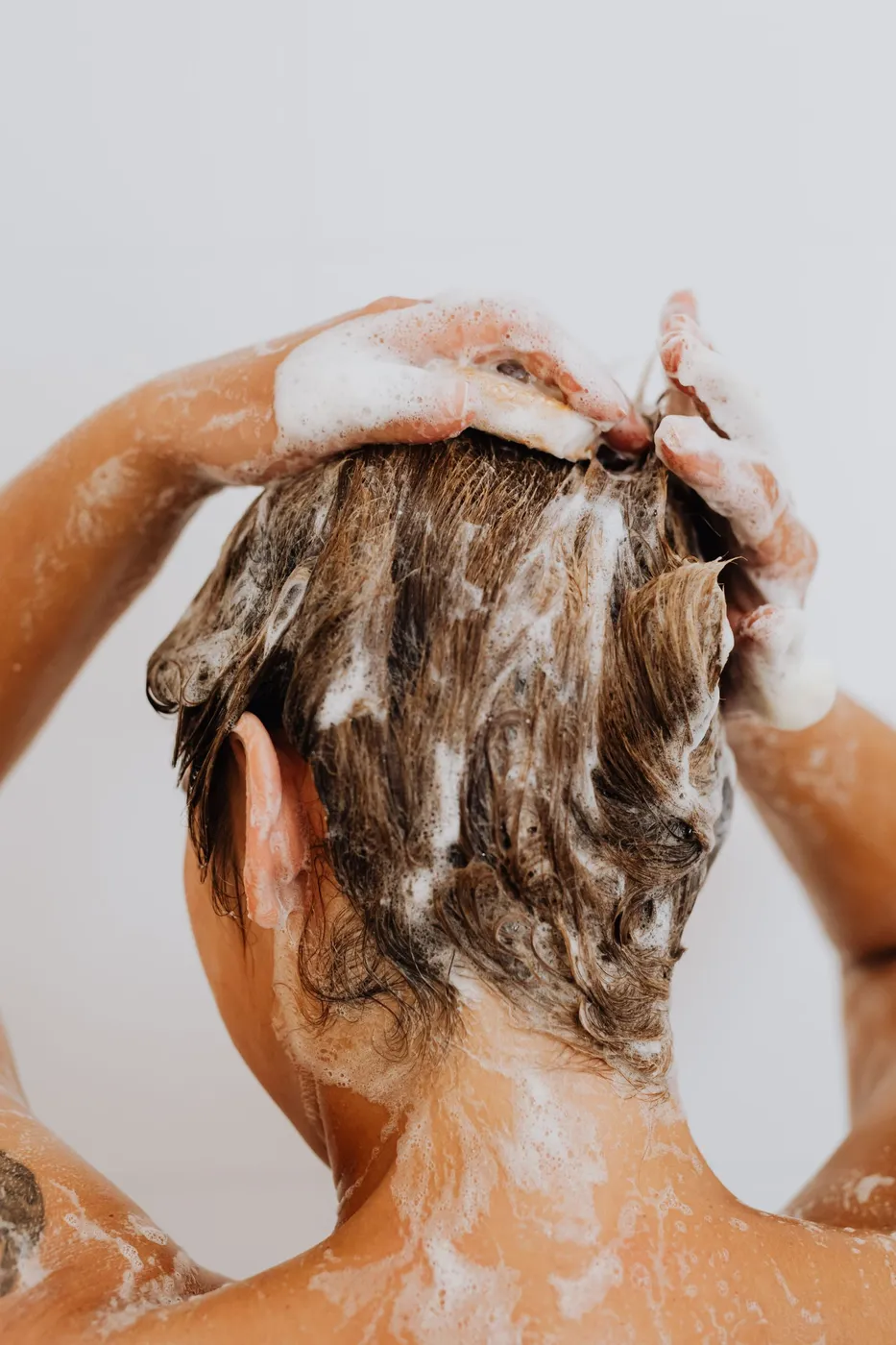
Dandruff is very common
Dandruff can affect up to half of the post-pubertal population (Turner et al., 2012; Grimshaw et al., 2019). It is more common in men, because sebum, the scalp’s natural oil, is food for the yeast involved in dandruff.
The balance behind dandruff
A community of bacteria and yeasts lives on the scalp. Its dominant members are Cutibacterium, Staphylococcus and Malassezia. On a scalp with dandruff, Malassezia yeast and staphylococci increase while Cutibacterium decreases (Clavaud et al., 2013). The same picture was repeated in China (Wang et al., 2015).
Scientists now describe dandruff not as an excess of a single fungus, but as a shift in the scalp’s microbiome balance combined with a weakened barrier.
Three factors: yeast, sebum, sensitivity
The yeast breaks down sebum and releases irritating fatty acids; in sensitive people this triggers flaking (DeAngelis et al., 2005). On a scalp with dandruff the barrier lipids are disorganised and water loss increases (Turner et al., 2012).
Dry dandruff or oily dandruff?
Dry dandruff shows up as fine, white flakes that fall easily; the scalp feels tight and itchy. Oily dandruff consists of larger, yellowish flakes that stick to the scalp, and the roots get greasy quickly. What both have in common is a disrupted scalp balance.
Care that supports balance
Studies with microbiome-focused shampoos saw a reduction in the appearance of dandruff: in a randomised, placebo-controlled study the flake count dropped significantly in 4 weeks (de Jesus et al., 2023); another study found less dandruff and less oiliness (Tsai et al., 2023).
The prebiotic formula helps support the bacteria and yeast balance of a dandruff-prone scalp. With gentle, barrier-supporting cleansing, flakes are less visible. Harsh shampoos strip oil but dry out the scalp, which can keep the cycle going.
Frequently asked
Is dandruff contagious?
No. Dandruff is linked to a shift in the scalp’s own balance.
Why does dandruff come back when I stop using anti-dandruff shampoo?
The root of dandruff lies in the scalp’s balance. Regular care that supports that balance, rather than targeting only the flakes, brings longer-lasting comfort.
Sources
- Turner et al. (2012). Stratum corneum dysfunction in dandruff. Int J Cosmet Sci. PubMed ↗
- Grimshaw et al. (2019). The diversity and abundance of fungi and bacteria on the healthy and dandruff affected human scalp. PLoS One. PubMed ↗
- Clavaud et al. (2013). Dandruff is associated with disequilibrium in the proportion of the major bacterial and fungal populations colonizing the scalp. PLoS One. PubMed ↗
- Wang et al. (2015). Characterization of the major bacterial-fungal populations colonizing dandruff scalps in Shanghai, China, shows microbial disequilibrium. Exp Dermatol. PubMed ↗
- DeAngelis et al. (2005). Three etiologic facets of dandruff and seborrheic dermatitis: Malassezia fungi, sebaceous lipids, and individual sensitivity. J Investig Dermatol Symp Proc. PubMed ↗
- de Jesus et al. (2023). Clinical evaluation of paraprobiotic-associated Bifidobacterium lactis CCT 7858 anti-dandruff shampoo efficacy. Int J Cosmet Sci. PubMed ↗
- Tsai et al. (2023). Heat-killed probiotic … ameliorates human scalp health by regulating scalp microbiome. BMC Microbiol. PubMed ↗